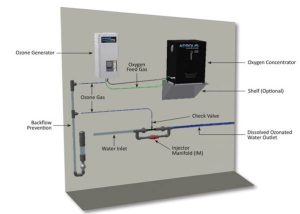
Water Purification
DOMESTIC Range- Household/office systems
Description
A BRIEF INTRODUCTION TO REVERSE OSMOSIS
Reverse Osmosis is a very fine filtration process, which occurs at a molecular level. This process, which allows only a given size of the molecule to pass and rejects the rest. In effect, the pores or holes in the membrane are so small that most of the harmful minerals and chemicals cannot pass, while water molecules pass through.
Rejected water carrying the minerals in a high concentration is drained off through the wastewater pipe, and the pure water is diverted to the storage tank for drinking. The System removes up to 95% of harmful minerals and chemicals, the system also removes suspended impurities such as dirt, sand, and rust, it improves the odour and taste of your municipal water and leaves good, clean, and healthy water for your consumption.
HOW THE DOMESTIC REVERSE OSMOSIS SYSTEM WORKS
- The incoming water passes through 3 types of filters before it reached your Reverse Osmosis Membrane.
- The first filter is the Polypropylene Filter, this filter removes the large suspended particles, such as dirt, sand, and rust.
- The second filter is a GAC (Granular Activated Carbon) Filter, this filter improves the taste and odor of your water as well as reducing the amount of chlorine, radon, heavy metals, and hydrogen sulfide as well as reducing finer particles of sediment in your water, by absorbing these elements from the water.
- The third filter is a CTO Carbon Block Filter, this filter consists of activated carbon particles fused into a uniform block with enhanced adsorptive capacity and efficiency. This means it further reduces the amount of chlorine, radon, heavy metals, and hydrogen sulfide as well as reducing finer particles of sediment in your water.
- Water then passes to the Reverse Osmosis Membrane where very fine particles are extruded from the water and dispensed through the wastewater pipe.
- The filtered water then passes through one last T33 (In-Line Carbon) Filter, to further reduce by absorption any remaining amounts of chlorine, radon, heavy metals, and hydrogen sulfide, that may have been missed by the Reverse Osmosis Membrane as well as reducing finer particles of sediment in your water.
- Water then flows to your Storage Tank, when you dispense water, it flows through your Mineral Ball Filterwhich replenishes your water with a variety of beneficial minerals, that improve the taste of and quality of your water.

50GPD REVERSE OSMOSIS SYSTEM WITH PUMP
- Booster Pump 24V
- 10L Stainless Steel Tank
- Sediment Filter, CTO, GAC,
- Post Filter & Membrane
- Option to upgrade with mineral filter & alkaline filter
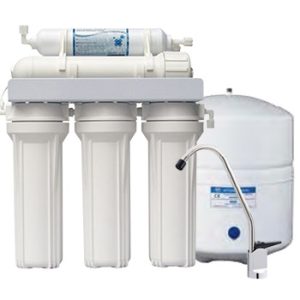
50GPD REVERSE OSMOSIS SYSTEM NON PUMP
- 10L Stainless Steel Tank
- Sediment Filter, CTO, GAC,
- Post Filter & Membrane
- Option to upgrade with mineral filter & alkaline filter
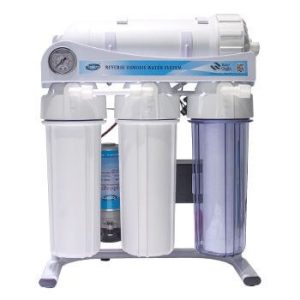
400GPD REVERSE OSMOSIS SYSTEM WITH PUMP
- Booster Pump 36V
- Direct flow, storage tank optional
- Sediment Filter, CTO, GAC,
- Post Filter & Membrane
- Option to upgrade with mineral filter & alkaline filter
300GPD REVERSE OSMOSIS SYSTEM WITH PUMP
- Booster Pump 36V
- Direct flow, storage tank optional
- Sediment Filter, CTO, GAC,
- Post Filter & Membrane
- Option to upgrade with mineral filter & alkaline filter

INDUSTRIAL- small, medium & large bottling plants
Description
Industrial Reverse osmosis pure water filtration systems technology is the most advanced and energy-saving membrane separation technology. The main working principle is to remove dissolved salt, colloid, microbial organisms under the action of osmosis pressure. As the RO membrane aperture is very small (only 10A), so other material cannot pass through a semi-permeable membrane.
The solute is retained on the pressurized side of the membrane and the pure solvent is allowed to pass to the RO membrane. This membrane should not allow large molecules or ions through the pores but should allow smaller components of the solution (such as solvent molecules) to pass the RO membrane.
The pumps used in industrial reverse osmosis water filtration systems include Shimge and CNP pumps that have passed ISO9001 quality system certification, ISO14001 environmental management system certification, CE certification, and material is stainless steel so as to prevent rust and pressure. This product is widely used in the food industry, such as juice, milk tea, infusion and cleaning for hospitals, etc.
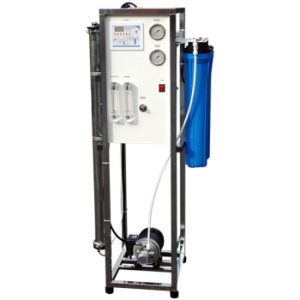
800 GPD RO SYSTEM
- Capacity 120 litres per hour
- Rotary vane Italian pump 400LPH@12Bar
- Membrane : 2540 x 1
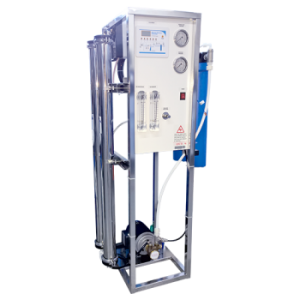
1600 GPD RO SYSTEM
- Capacity 240 litres per hour
- Rotary vane Italian pump 400LPH@12Bar
- Membrane : 2540 x 2

2000 GPD RO SYSTEM
- Capacity 300 litres per hour
- Rotary van pump motor (1HP)
- Membrane : 4040 x 1

4000 GPD RO SYSTEM
- Capacity 500 litres per hour
- Multi-Stage Centritugal Pump(3HP)
- Membrane: 4040 x 2

5000 GPD RO SYSTEM
- Capacity 750 litres per hour
- Multi-Stage Centritugal Pump (3HP)
- Membrane: 4040 x 3

6000 GPD RO SYSTEM
- Capacity 1 000 litres per hour
- Multi-Stage Centritugal Pump (3HP)
- Membrane: 4040 x 4
REVERSE OSMOSIS PACKAGES
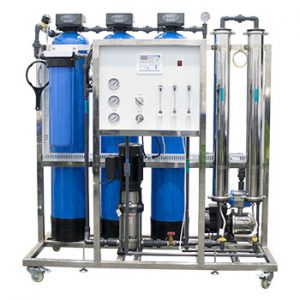
RO 500LPH ON A SKID
- Capacity 500 liters per hour
- Feed water pump
- 2 x 4040 Membranes
- 1054 Automatic Sand Filter
- 1054 Automatic Carbon Filter
- 1054 Automatic Softener Filter
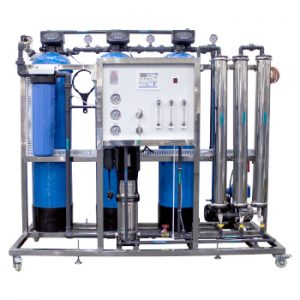
RO 750LPH ON A SKID
- Capacity 750 liters per hour
- Feed water pump
- 3 x 4040 Membranes
- 1252 Automatic Sand Filter
- 1252 Automatic Carbon Filter
- 1252 Automatic Softener Filter

RO 1 000LPH ON A SKID
- Capacity 1 000 liters per hour
- Feed water pump
- 4 x 4040 Membranes
- 1354 Automatic Sand Filter
- 1354 Automatic Carbon Filter
- 1354 Automatic Softener Filter
UV Sterilization
Ultra Violet Systems
UV water sterilizers are used in water purification and treatment to make water healthier and prolong the life of water that has been treated and processed. The word “sterile” is defined as being free from living germs or microorganisms. An Ultraviolet sterilizer extraordinarily cleans water and kills bacteria and microorganisms that can be able to infest water even after it has been treated.. Once the water leaves the purifier, it is ready for use with no further contact time required. It has simple and easy to install and maintain. Compact units need a small space to operate and store. Ultraviolet water sterilizers deliver ongoing disinfection without special attention or measurement. There are no detections of chlorine taste or corrosion problems.

Ozone Sanitation Systems
Ozone is made artificially by passing oxygen through ultraviolet light or a “cold” electrical discharge which causes oxygen molecules (O2) to split apart in a process called photolysis. Ozone is also a very strong, broad spectrum disinfectant that is an effective method to inactivate harmful protozoa and also works well against almost all other pathogens. Ozone is used by many municipal drinking water systems to kill bacteria instead of the more common chlorine. Ozonisation is a preferred solution for killing microorganisms in water because it leaves no residue in the water after treatment and has the additional advantages of high oxidation potential, fewer dangerous by-products and the absence of taste and odor problems associated with chlorination.